- Growth Shuttle Insider
- Posts
- RevOps in PE requires integrated GTM, not just more sales
RevOps in PE requires integrated GTM, not just more sales
The disjointed and siloed marketing, sales, CX departments need to move alongside product and executive strategy

Mario Peshev
April 01, 2026

Operators and investors,
The hard truth is that many PE firms are still treating RevOps as a glorified sales ops function - or just a fancy term for CRM optimization. This fragmented view of go-to-market is a pervasive problem, directly undermining portfolio company value & leaving millions in EBITDA on the table.
I recently advised a $120M ARR professional services company within a portfolio where the PE firm invested an additional $5M into sales tooling & headcount, yet revenue growth slowed year-over-year. Why? Because marketing & customer success operated in complete silos, leading to lead qualification issues & high churn that negated every sales productivity gain. You can't throw more reps at a leaky bucket & expect it to fill faster.
This isn't just about inefficient spending. We see a fundamental misunderstanding of how the revenue engine actually works. The traditional arbitrage model of buying low & selling high is already under pressure, and these kinds of disjointed tactical plays only exacerbate the problem by baking in inefficient growth strategies from day one.
The illusion of isolated revenue functions
Many PE-backed companies operate with sales, marketing, & customer success teams that are not only separate but often at odds. This creates friction, customer confusion, & ultimately, significant revenue leakage. I've seen it across companies ranging from $50M to $450M in top-line revenue.
Disconnected lead handoffs. Marketing generates leads that sales deems unqualified, leading to wasted effort & resentment. One portfolio company had a 60% rejection rate on marketing-qualified leads from sales - effectively burning half the demand gen budget before a single discovery call was booked.
Inconsistent messaging across the lifecycle. Sales promises features marketing didn't advertise, or customer success can't deliver. This directly damages CLTV. I worked with a mid-market SaaS company where post-sale NPS dropped 30 points because onboarding couldn't deliver on what was sold. The resulting churn wiped out two quarters of new logo gains.
Fragmented data, fragmented decisions. Critical customer data lives in separate CRMs, marketing automation platforms, & support ticketing systems, making a unified customer view impossible. Without it, you're flying blind on cross-sell & expansion opportunities - typically the highest-margin revenue in any SaaS portfolio company.
Post-sale abandonment. Once a deal closes, the sales team disengages, leaving customer success to pick up the pieces without full context or aligned incentives. This contributes to 20-30% churn in some SaaS portfolios. That's not a retention problem - it's a structural GTM failure.
These are common challenges the RevOps retainer accounts with DevriX face (here are the day-to-day RevOps targets the team focuses on).
Why integration creates repeatable revenue engines
True RevOps isn't just a tech stack. Even after 25 years in engineering organizations, the true value lies elsewhere.
It's a strategic operating model that unifies all customer-facing functions under a common goal: predictable, efficient revenue growth. This means aligning processes, data, KPIs, & incentives across the entire customer journey - not just optimizing one slice of the funnel.
Align metrics & incentives across the full lifecycle. Move beyond individual team quotas to shared revenue goals, customer retention targets, & LTV metrics. One PE-backed B2B company I worked with shifted comp structures to include a shared Net Revenue Retention target - finger-pointing dropped, and NRR improved by 8 points within two quarters.
Standardize customer journey stages with clear ownership. Map out every touchpoint from first impression to renewal & define explicit handoff protocols. This eliminates the gray zones where leads die & customers churn silently. Most companies don't even have a documented handoff SLA between marketing & sales - let alone between sales & CS.
Implement a unified data layer (not just a unified tool). Consolidate or integrate CRM, marketing automation, & customer success platforms to create a single source of truth. The goal isn't one tool - it's one version of the customer record. This improves forecasting accuracy by 15-20% and unlocks intelligent segmentation for expansion plays.
Establish a RevOps leader with real authority. Appoint a seasoned RevOps executive who sits across all three functions with authority to enforce cross-functional alignment & process standardization. This is not an IT role or an ops coordinator - it's a strategic operational leader who reports directly to the CEO or COO.
The EBITDA impact of a unified revenue strategy
When GTM functions operate as a cohesive unit, the impact on EBITDA & valuation is measurable and significant.
Increased sales efficiency. Fewer unqualified leads, better conversion rates, & a shorter sales cycle. We've observed 15-25% improvements in sales productivity across portfolios that adopt this model - driven primarily by better lead quality upstream, not more activity downstream.
Higher retention & LTV. Consistent messaging & proactive support lead to customers who stay longer & expand faster. One PE-backed company I advised saw a 10% reduction in gross churn within 12 months of implementing a unified RevOps function - translating to roughly $3.5M in preserved ARR.
Improved forecasting & predictability. With integrated data & aligned KPIs, revenue forecasting becomes far more accurate - crucial for board reporting, debt covenant compliance, & investor relations. The companies that get this right consistently beat plan, which compounds trust with LPs & lenders over multiple quarters.
Enhanced exit multiples. A demonstrable, repeatable revenue engine with strong unit economics is deeply attractive to strategic & financial buyers alike. It reduces the "key person risk" discount and positions the business as a platform - not a project. That's the difference between a 6x and an 8x+ exit.
This week's action plan
This exercise is pulled from my Async Advisory program. Here’s a focused 5-day sprint can surface where the real damage is happening.
Day 1: Pick one portfolio company & map the lead-to-renewal journey. Not the theoretical version from the board deck - the real one. Interview one person from sales, one from marketing, and one from CS. Ask each: "What happens after you hand off to the next team?" Document every gap.
Day 2: Quantify the leakage. Pull three numbers: MQL-to-SQL conversion rate, average time from closed-won to first CS touchpoint, and logo churn rate by cohort. If any of those are missing or take more than an hour to pull, that's your first finding.
Day 3: Identify three friction points. Based on your interviews and data pull, isolate the three biggest breakdowns between sales, marketing, & customer success. Rank them by estimated revenue impact.
Day 4: Design a single intervention. Pick the highest-impact friction point and draft a 30-day remediation plan. One owner, one metric, one deadline. Not a committee - a person.
Day 5: Pressure-test with the management team. Present your findings and the intervention plan to the portco CEO and functional leaders. If there's pushback, that tells you something about the cultural readiness for RevOps - which is itself a finding worth reporting back to the IC.
Last time I touched on a focused RevOps material for PE was in November - RevOps in Private Equity. Forward this to an operating partner or an executive in one of your portfolio companies and run the exercise together.
Mario
My take
One of my evergreen business posts compiling the most common business challenges for SMBs to large enterprises:

❓️ Also - is AI SDR penetration real?
Market insights & opportunities
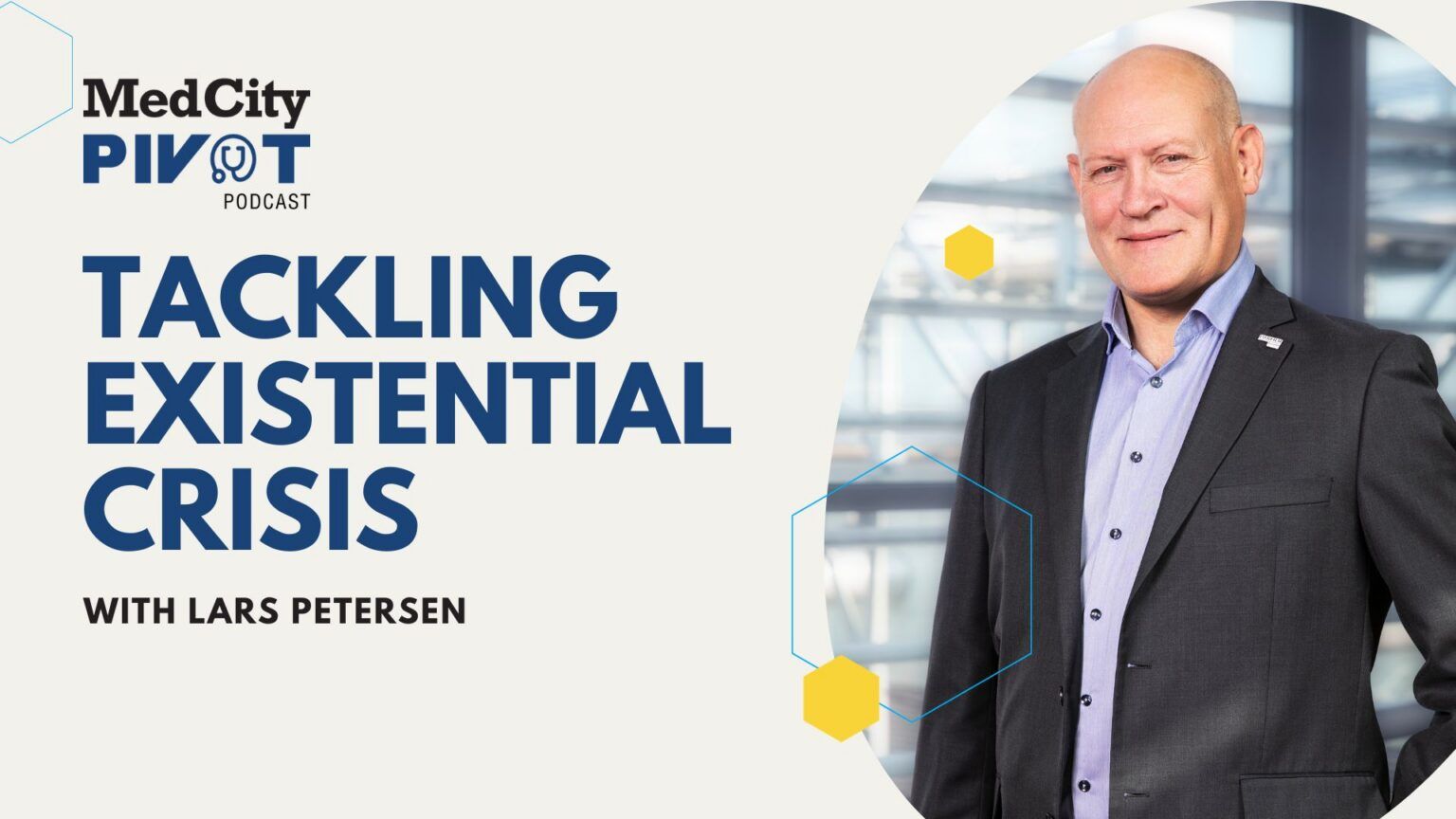
Lars Peterson is President & CEO of Fujilfim Biotechnologies
Fujifilm reallocated capabilities, not just strategy. Rather than “rebranding,” the company rebuilt its operating model around healthcare manufacturing and partnerships after film demand cratered.
Strategic capital shows up early in tokenisation. Brickken raised €3M to scale compliant tokenisation for equity, debt, funds, and real-world assets - backed by Marco Podini (Dedagroup) and GRX, signalling infrastructure + distribution value over hype.
Europe’s critical-minerals push is getting real-time visibility. Sensmet raised €1.5M from EIT RawMaterials to scale continuous, lab-grade metals monitoring that strengthens Europe’s raw-materials resilience.
Post-acquisition capital deployment becomes the signal. Beyond the deal, Prime Healthcare is framing success as speed of reinvestment: upgrades, clinical capacity expansion, and measurable operational strengthening soon after taking control.

AI Education SaaS: A 2-year-old AI-powered education platform with 6.7K users helping students improve performance through automation. Generating ~€4.4K monthly profit with steady growth and low churn, it’s priced at $46,591 (reduced 21%).
Electronics YouTube Channel: A 3-year-old electronics review channel with over 122K subscribers and diversified revenue streams. Generating ~$15.7K in monthly profit with strong margins and monetization history, it’s offered at $400,000.
B2B SaaS Ecosystem: A 6-year-old SaaS platform suite powering over 1,600 speakers and coaches across 7 integrated products. Profitable with recurring revenue and zero marketing spend, generating ~€5.5K monthly profit, it’s listed at $855,781.
Content Marketing Website: A 10-year-old automated marketing platform generating ~$900K annual revenue with exceptional 95% margins and over 3K subscribers. Producing ~$72K in monthly profit with a hands-off setup, it’s priced at $1,700,000.
Working with me
🌐 Scaling $30M - $100M+ mid-market companies with value creation through RevOps, data engineering, and WordPress. DevriX provides full RevOps consulting + delivery with GTM enablement for PE-backed portfolio companies, traditional tech, healthcare, finance, and professional service businesses pacing toward revenue growth initiatives. Our standard retainers between $10K and $60K include revenue lifecycle services for marketing and sales leaders, FP&A for financial teams, pipeline enrichment through websites and dozens of lead sources, automations and delivery integrations, CRO and ongoing testing, product delivery and platform integration solutions, and more through our consulting solutions.
🚀 1:1 Consulting. At Growth Shuttle, I run two popular plans: Async Advisory ($3,500/mo) for $3M - $30M founders and executive teams and the smaller Strategic Growth Circle ($997/mo) for $100K - $500K entrepreneurs, agency founders, scale ups. My fractional executive plan is also available here.
📈 Building US LLCs from Europe. I help European and Asian founders scale faster through doola and their “Business in a Box” model. Also suitable for US citizens (given their bookkeeping solution), but in very high demand across Europe.
📊 Post-Merger Integration. We take on M&A initiatives with Flippa. Working closely on PMI retainers for PE companies and fast-growing startups integrating new companies within their portfolios, enabling data pipelines, and securing more deals through my personal network.