- Growth Shuttle Insider
- Posts
- The Operating Partner's 2026 checklist to cover in every portfolio firm
The Operating Partner's 2026 checklist to cover in every portfolio firm
Driving value beyond P&L management on autopilot when hiring and contracting

Mario Peshev
January 07, 2026

Dedicating this release to a role that's become absolutely critical for value creation in PE:
The Operating Partner
For years, the Operating Partner was often seen as an advisory figure, a seasoned expert providing high-level guidance. But that's no longer enough as the market demands more.
Today's Operating Partner is a hands-on executor, an embedded change agent, and a critical driver of EBITDA performance and exit readiness.
This is a fundamental redefinition of the old playbook in both mid-market, venture capital, and private equity. As PE firms navigate increasingly competitive markets and complex distressed situations, the Operating Partner's direct involvement in operations, technology, and revenue generation makes a dramatic difference in 2026.
If your Operating Partners are still just giving advice from a distance in this stage of “operational efficiency” and AI augmentation in a realm packed with data signals, you're leaving significant value on the table.
Let's unpack how to maximize their impact.
From advisory to execution: biggest impact areas
The modern Operating Partner is a SWAT team leader, capable of parachuting into a portfolio company and directly influencing key operational levers. Unlike random consultants, an operator’s impact is tangible, reflected in the balance sheet.
And there are plenty of verticals a great Operating Partner owns: usually several of these together:
RevOps transformation: This is often the lowest-hanging fruit and the area where I see the most consistent direct impact. This is why we took the RevOps-first consulting route at DevriX as a gateway to our mid-market deals.
Sales process optimization: Streamlining lead-to-cash, implementing CRM best practices, defining clear sales methodologies. I've seen Operating Partners slash sales cycles by 20% within months just by enforcing disciplined process and leveraging existing tech stack more effectively.
Marketing & demand generation revamp: Moving beyond vanity metrics to truly attributable ROI. This includes optimizing digital channels, refining messaging, and ensuring marketing efforts directly feed a qualified sales pipeline.
Pricing strategy overhaul: Many acquired companies underprice their offerings. An Operating Partner with a keen eye for market dynamics can unlock significant revenue uplift through strategic pricing adjustments and packaging. I recently advised a portfolio company that boosted monthly recurring revenue by 15% simply by restructuring its pricing tiers and adding value-added services.
Technology modernization & optimization: Beyond just IT, this involves leveraging technology for competitive advantage.
SaaS stack rationalization: Eliminating redundant tools, negotiating better contracts, and ensuring existing systems are fully utilized. The sheer amount of unused or underutilized software in many legacy businesses is staggering.
Automation of core processes: Identifying repetitive tasks in finance, operations, or customer service and implementing automation solutions. This frees up human capital for higher-value activities and reduces errors.
Data infrastructure & analytics: Ensuring robust data collection, accurate reporting, and the capability to derive actionable insights for strategic decision-making. You can't improve what you can't measure.
Operational efficiencies & cost reduction: This is classic PE territory, but with a renewed focus on sustainable improvements, not just blunt cuts.
Supply chain resilience & optimization: Especially critical post-pandemic, ensuring robust supplier relationships, diversified sources, and efficient logistics.
Lean manufacturing/service delivery: Identifying bottlenecks, waste, and inefficiencies in production or service delivery processes.
Workforce productivity & talent management: Optimizing team structures, establishing clear KPIs, and fostering a performance-driven culture. Sometimes, it's not about cutting staff, but redeploying and upskilling existing talent.
Strategic planning & M&A integration: the complete PMI process end-to-end.
Defining a clear 100-day plan: Working with management to establish aggressive yet achievable targets for the initial post-acquisition phase.
Integration playbook development: For platform companies, ensuring seamless integration of bolt-on acquisitions to capture synergies quickly and effectively.
The value set is complementary to ELT and the board
In 20 years of solving enterprise problems as a consultant, advisor, embedded unit, value creation partner, and fractional CXO, I’ve taken on different roles depending on the hold co, the board, and the rest of the executive team.
Where tech-first PEs are already well-equipped to manage fast-growing SaaS or AI-backed solutions, they lack for industry expertise, operational efficiency, or demand generation. Great engineering teams often lack these traits.
In finance-first venture funds or PE firms, we plug in technology for data enablement, signal tracking, FP&A, and dashboard guidance for boards.
For PR and media-first teams - especially working with LA businesses - strong scalability with proper due diligence against “shortcuts” and copyright infringements, as well as securing for resilience and reliability pre-exit.
For traditional financial buyers, deploying the PMI playbook with a 100-day execution plan right after the due diligence is over.
T-shaped professionals are in high demand today, particularly in an AI-driven era where experts can 10x their performance knowing what the output looks like. This is where horizontal expertise in other boards and executive teams is so valuable today.
We will cover a working playbook with questions to ask in the upcoming release next week.
You can invite your board or private equity partners to this bulletin, read by 30,000+ industry professionals, by forwarding this email or sending them to https://insider.growthshuttle.com/
Mario
My Take
👨🏭 Operational friction is the biggest pet peeve of PEs today - as 2023 through 2025 problems were solved with budget cuts and layoffs, what remains a stumbling block is operational friction - here’s why.
💼 Deploying some updates to our own accounting app - thanks to copilot engineering, I’ve increased my own output and productivity, including through our revamp accounting app for scorecard reporting for our ops team and internal OKRs. A snapshot from Antigravity from the other day.
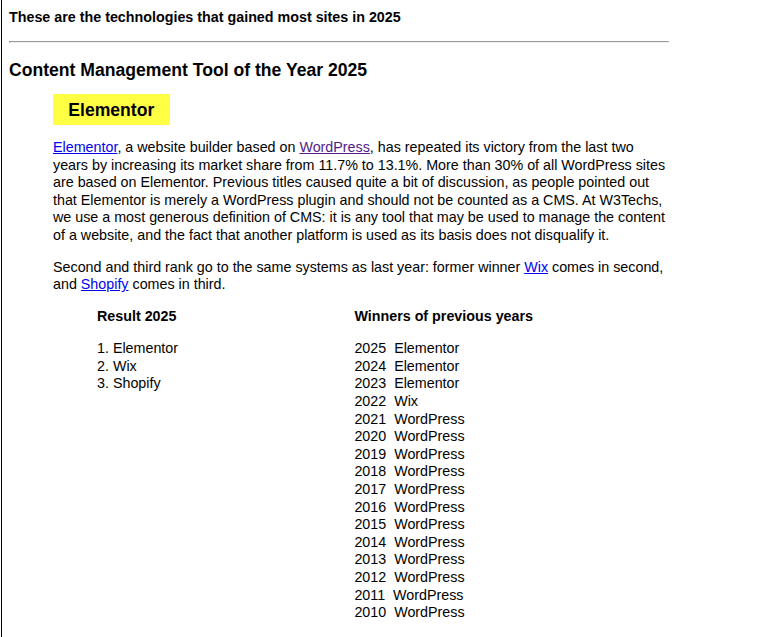
Vibe coding or not, WordPress leads all new websites globally
Vote for newsletter format of 2026 (1 min)
We first ran this poll on Jan 1, but I’m gathering additional responses before we take action. I’m keeping this edition simplified (no external articles and M&A offers) - what do you want to see as format in the new year?
Should the newlsetter format stay the same in 2026?The 2025 newsletter format followed this structure: - My intro - My take (other posts on social/podcasts/interviews) - Recommended books - Our B2B ecosystem (other sites) - Industry news - Investment opportunities (Flippa) Should we trim, keep, or redo? |
A single click to vote for the format for the new year 👆️
For reference, the newsletter has been going through stages:
AI and RevOps (a 2025 example)
Slashing half the newsletter (the end of 2024 update)
Stock market crash (2024 including stock news)
Down rounds and exits (a simplified ‘24 formatting streamlined)
#AskPeshev text-only (2023)
And earlier versions in the past 5 years.
I’ll be revamping the “Working with me” section as well based on the votes below.
Mario